

Amis Aborigines yesterday protested outside the legislature against a proposed development law and development projects in traditional Amis areas along the east coast, plans for which they claimed local residents were not consulted.
“We demand that Aborigines be consulted and involved in any development projects undertaken on traditional Aboriginal lands as the Aboriginal Basic Act (原住民族基本法) stipulates,” Kawlo Iyun Pacidal, a member of the Amis Defense Alliance, told reporters at the demonstration.
“We also demand that a co-management mechanism between locals and the operator of any development projects be established,” Pacidal said. “Based on the first two demands, we are asking for a halt to the planned Baosheng [Aquarium Park] project.”

Photo: Chu Pei-hsiung, Taipei Times
Four tourism facilities, including theme parks, resorts and hotels, are to be built around the Sansiantai (三仙台) area in Taitung County, a traditional Amis domain known by the tribe as “Pisiliang.”
The Baosheng project has attracted special attention because construction was scheduled to start on Monday, though it was postponed indefinitely because of strong opposition from local residents, said Namoh Nofu Pacidal, another member of the Amis Defense Alliance.
“The developer [of the Baosheng project] called a meeting with local residents on May 30, but did not allow the locals to talk and the purpose of the meeting was only to announce that construction was to begin within a week,” Namoh Nofu Pacidal said. “When they made their presentation, the locals requested Amis interpretation because many elders could not understand Mandarin, but the request was rejected.”
While the situation remains unresolved, the alliance called on the government and developers to abide by the Aboriginal Basic Act, and refrain from development projects without consent from Aborigines.
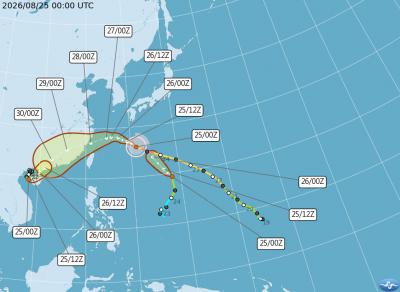
Typhoon Saudel has shown signs of weakening but is still expected to affect Taiwan when it comes closest to the nation on Friday, the Central Weather Administration (CWA) said today. The radius of Saudel shrank to about 220km as of 8am today from 250km a day earlier, and its maximum sustained winds were down to 155kph from 184kph previously, the weather agency said. As of 8am, Typhoon Saudel was 980km east of Taipei, moving west-northwest at 18kph, it said. Under the influence of a Pacific high pressure system, the storm is moving northward, meaning it is less likely to make landfall in Taiwan,

Minister of Sports Lee Yang (李洋) today said the Chinese Taipei Basketball Association (CTBA) has been urged not to undermine Taiwan’s credibility in international competitions, after a Taiwanese team advanced to the semi-finals of the 45th William Jones Cup over the Philippines last week due to a controversial new rule guaranteeing a semi-final place to the host team. The Republic of China Blue team advanced to the semi-finals after winning just one game in the group round due to a “host guarantee” spot, overtaking the Philippines, who held a 5-1 record ahead of the semi-finals. The Blue team finished the tournament
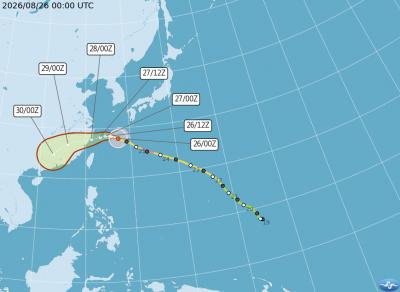
A sea warning for Typhoon Saudel, which has shifted to a more northerly track as it nears Taiwan, is expected early tomorrow, the Central Weather Administration (CWA) said today. As of this morning, Saudel was about 650km east-northeast of Taipei, moving west-northwest at 12kph with maximum sustained winds of 162kph, CWA data showed. Although Saudel remains a moderate typhoon, it has weakened and is expected to weaken further as it nears Taiwan due to unfavorable atmospheric and ocean conditions, CWA forecaster Lin Po-tung (林伯東) said. The storm is forecast to make its closest approach to Taiwan tomorrow and on Friday, Lin added. According to
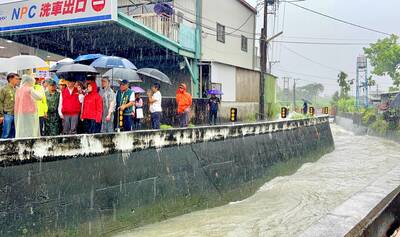
SEA WARNING EXPECTED: As atmospheric conditions are unfavorable for its development, the storm’s intensity is continuing to weaken, a CWA official said Typhoon Saudel is continuing to weaken and shift its path northward, with a sea warning expected to be issued this evening, the Central Weather Administration (CWA) said yesterday. The agency did not rule out issuing a land warning for outlying Lienchiang County (Matsu) tomorrow morning, although all storm warnings could be lifted by Friday night. Saudel is expected to be closest to Taiwan from tomorrow night to Friday, bringing localized heavy rain to northern and southern Taiwan, as well as central mountainous areas, the agency said. As of 2pm yesterday, the center of moderate Typhoon Saudel was about 890km east-northeast


 RSS
RSS